
BlogDestination
Raja Ampat Diving Guide: Best Time, Sites and Species
Raja Ampat diving guide: the best time to go, reef mantas and pygmy seahorses, Cape Kri and Blue Magic, marine park fees and the level you need.
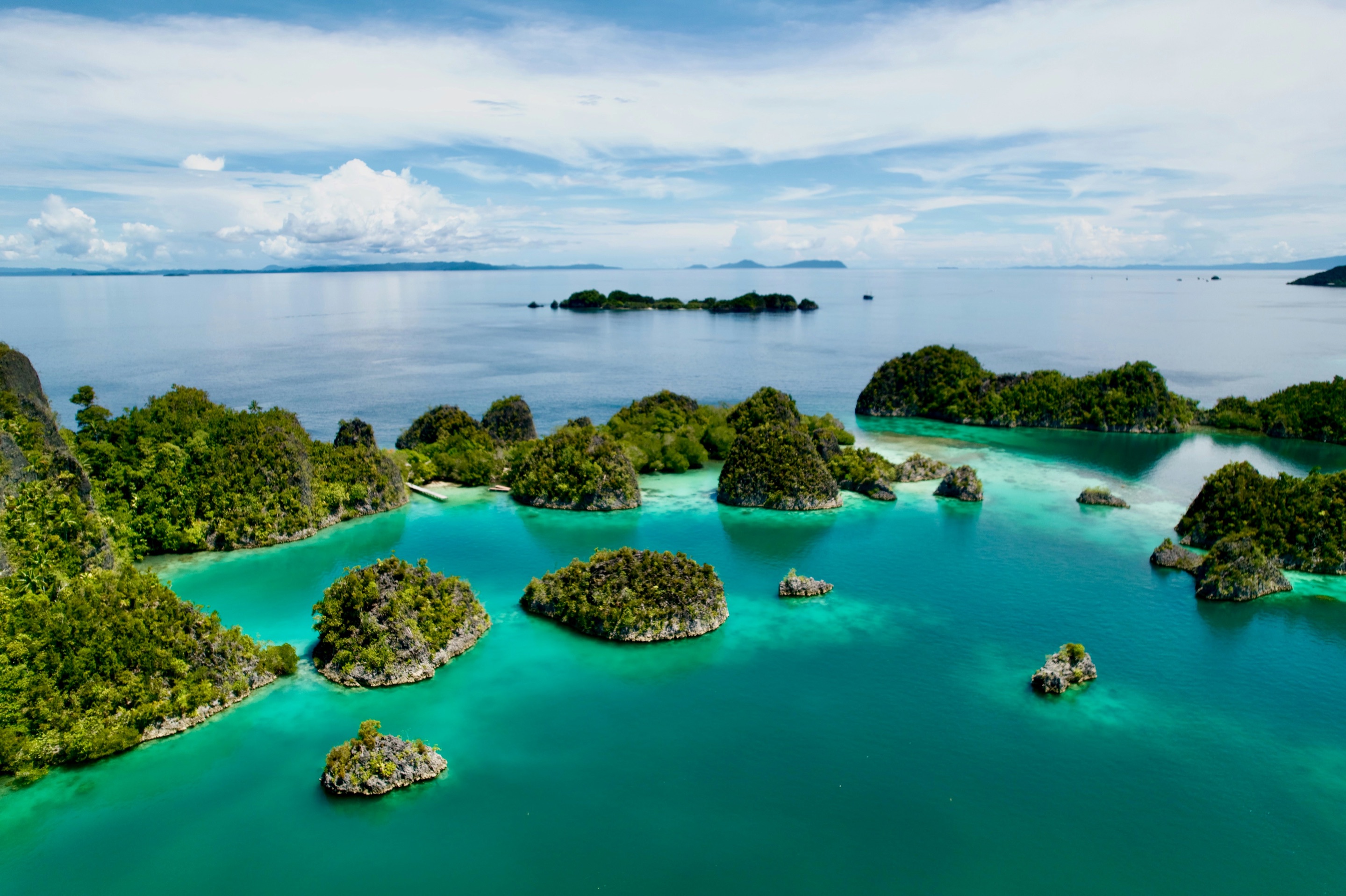
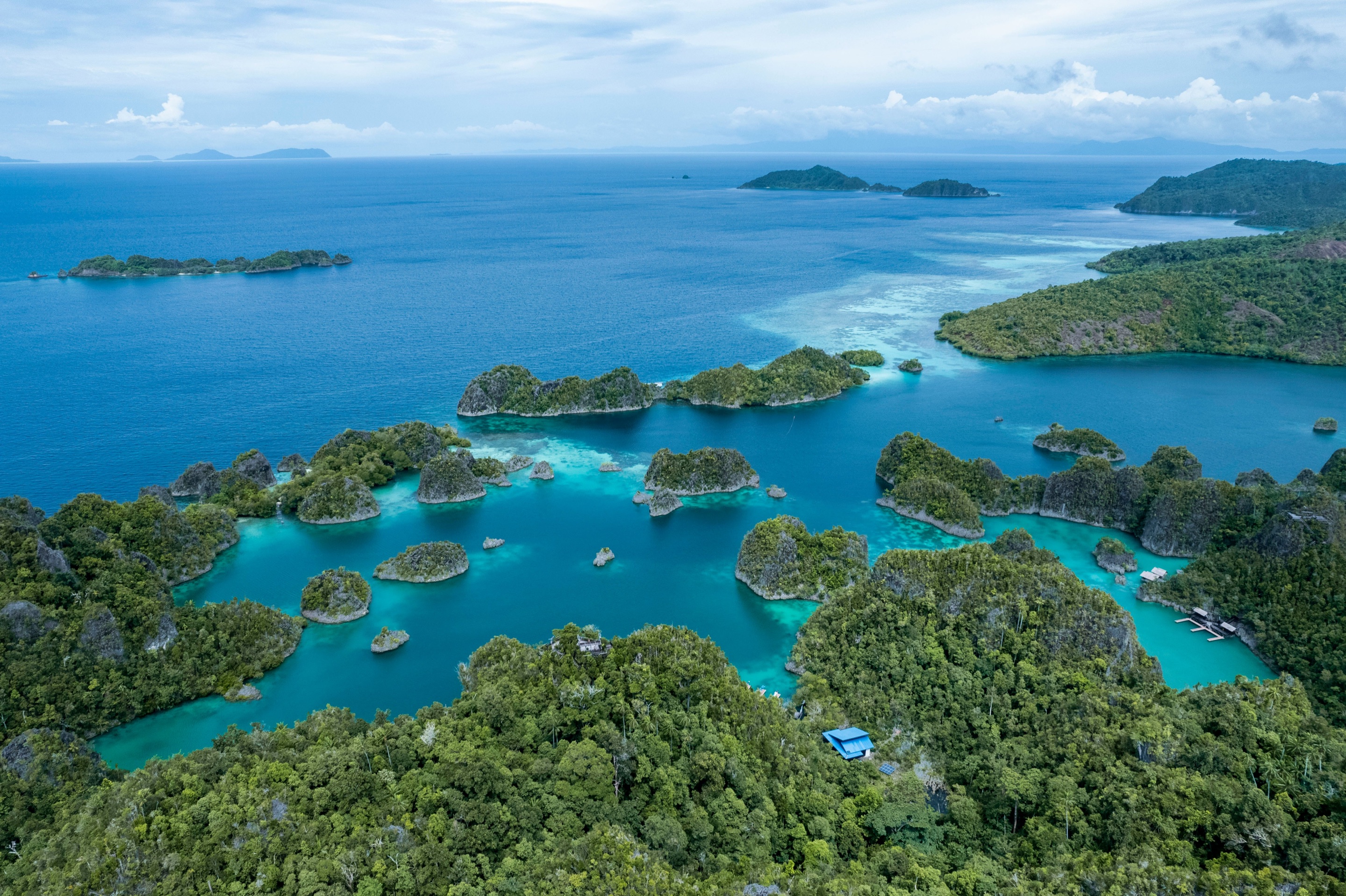
Photo: Erick Morales Oyola / Unsplash
Raja Ampat diving means diving the most species-rich reefs on Earth: around four hundred islands off the western tip of Papua, Indonesia, in the heart of the Coral Triangle. The best time to go is October to April, water sits at 28–30 °C, and the headline sites — Cape Kri and Blue Magic — run strong currents, so arrive with Advanced Open Water and some drift diving behind you.
This guide covers when to go, which species you can find and at what depth, what the three key sites are like, how to get there, which fees you pay and what level you really need.
Why dive Raja Ampat
Most destinations are known for one thing. Raja Ampat gives you three on the same trip: big animals (reef mantas, blacktip reef sharks, Napoleon wrasse), world-class macro (pygmy seahorses, ribbon eels) and shallow hard coral in excellent shape.
Currents are the reason. Water pushing through the Dampier Strait carries nutrients that feed the reef, and the reef feeds everything else. In April 2012, ichthyologist Gerald Allen counted 374 fish species on a single dive at Cape Kri, a tally still quoted as the record.
Best time to dive Raja Ampat
You can dive all year, but the monsoon changes conditions a lot:
- October to April (peak season): calmer seas and the best visibility, often 20–30 metres. This is the main season for liveaboards and resorts, with December usually the strongest month.
- May and June (shoulder): rain starts and currents pick up; visibility drops to around 15–25 m.
- July and August (roughest months): southerly winds, waves across the Dampier Strait and visibility that can fall below 15 m with plankton and runoff. Many liveaboards move to other areas.
- September: the monsoon eases and conditions gradually improve.
Water temperature: 28–30 °C for most of the year, a little cooler (27–28 °C) in the shoulder months. A 3 mm wetsuit is usually enough.
On mantas: they visit cleaning stations year-round, and sources disagree on which month is best. What they do agree on is that the tide matters more than the month — ask your dive centre which site and which time suit the current that day.
What you'll see: Raja Ampat marine life
These are the species that define the destination and the ones worth planning dives around:
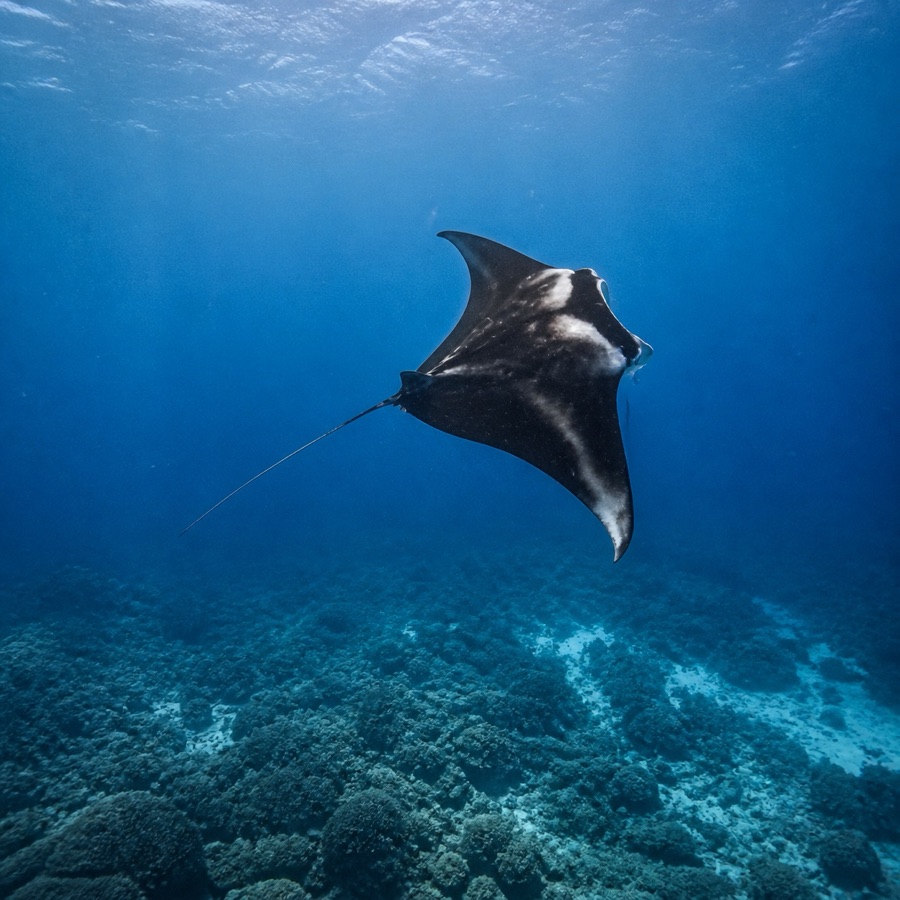
- Reef manta ray (Mobula alfredi): the headline act. Comes in to cleaning stations on seamounts such as Blue Magic (8–30 m). Listed as Vulnerable by the IUCN. Not hard to see in season, but never guaranteed.
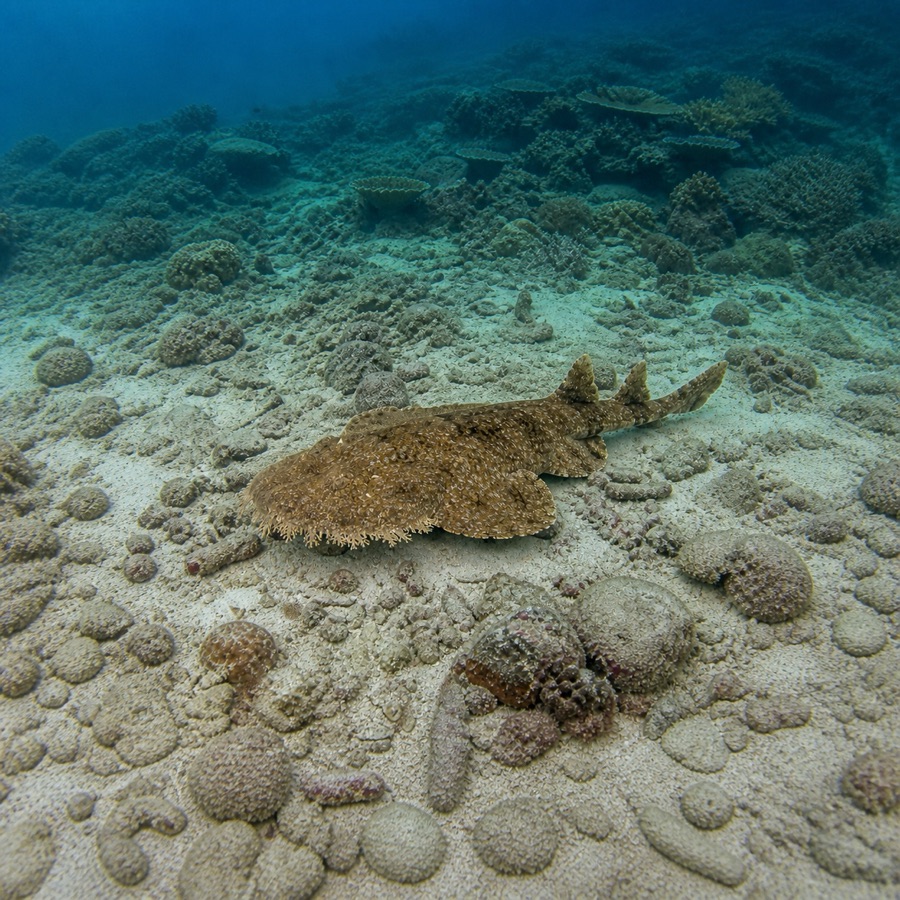
- Tasselled wobbegong (Eucrossorhinus dasypogon): a carpet shark up to 1.8 m long with a fringe of branching flaps around its head that camouflages it against the reef. It blends into the bottom, so search slowly. One of the hardest species on this list to find.
- Pygmy seahorse (Hippocampus bargibanti): tiny, living on gorgonian sea fans between 10 and 40 m. Nearly impossible to spot without a guide who knows each fan.
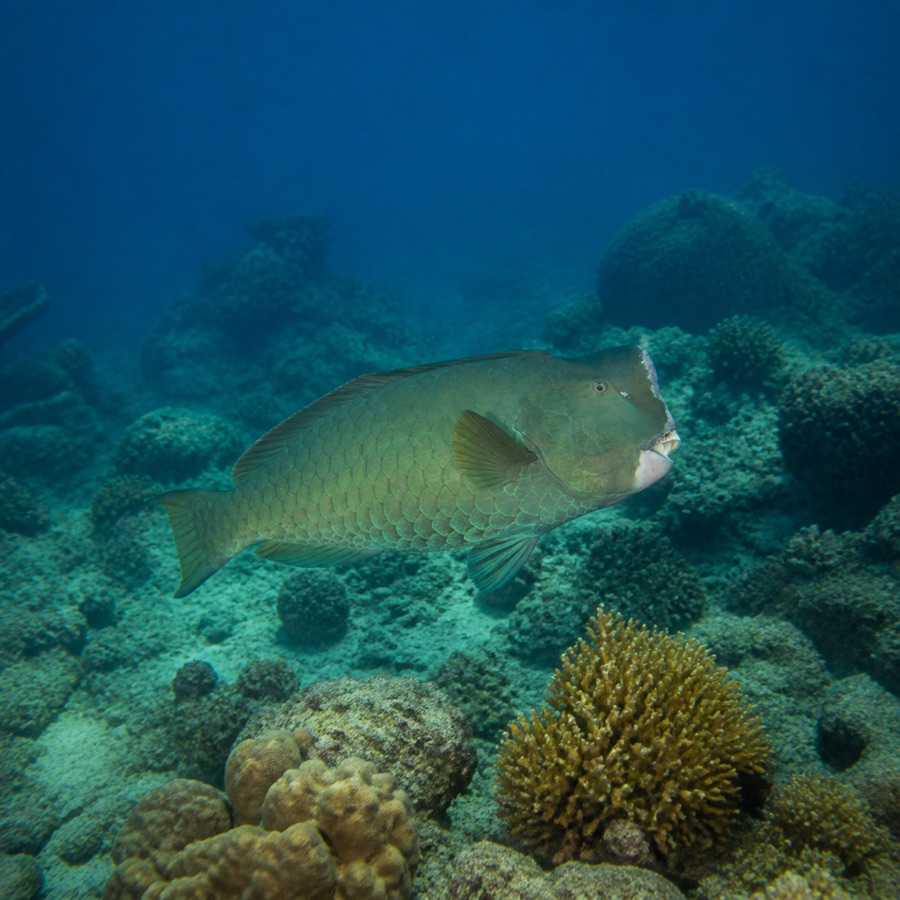
- Bumphead parrotfish (Bolbometopon muricatum): the largest parrotfish, up to 1.3 m. Lives on reefs and in lagoons from the surface to 30 m, and is one of Raja Ampat's regulars.
- Napoleon wrasse (Cheilinus undulatus): a huge wrasse, Endangered on the IUCN Red List. Most often recorded between 10 and 20 m and one of the standout species at Cape Kri.
- Ribbon eel (Rhinomuraena quaesita): pokes out of holes in sand and rubble. Uncommon — ask your guide to point one out.
On the current sites you'll also meet giant trevally (Caranx ignobilis), great barracuda (Sphyraena barracuda), two-spot red snapper (Lutjanus bohar) and blacktip reef sharks (Carcharhinus melanopterus). In the shallow gardens, ocellaris anemonefish (Amphiprion ocellaris), broadclub cuttlefish (Sepia latimanus) and clouds of blue-green chromis (Chromis viridis).
Best dive sites in Raja Ampat
Cape Kri: the biodiversity record
- Level
- advanced
- Depth
- 5–40 m
- Current
- strong
- Entry
- boat
- Off the tip of Kri Island in the Dampier Strait. A coral slope where the current drives schools of giant trevally, snapper and barracuda, with blacktip reef sharks and Napoleon wrasse on patrol.
- Home of the 374-species record. When the current is running, you either drift or hook in.
Blue Magic: a manta cleaning station
- Level
- advanced
- Depth
- 8–30 m
- Current
- strong
- Entry
- boat
- A seamount in the Dampier Strait, exposed to the current. Reef mantas come in to be cleaned while trevally, barracuda and clouds of chromis circle the top.
- Dive centres recommend it only for advanced divers with current experience. The usual approach is to wait at a fixed spot, reef hook on dead rock, and let the mantas come to you.
Melissa's Garden: hard coral in five metres
- Level
- beginner
- Depth
- 5–20 m
- Current
- mild
- Entry
- boat
- A hard coral garden in the Fam Islands area, at its best just a few metres below the surface. Anemonefish, broadclub cuttlefish and Acropora millepora coral, listed as Endangered by the IUCN.
- The ideal first-day dive, a good fit for newly certified divers and great for natural-light photos.
Raja Ampat is ranked first among the destinations in Nuddi's Trips tab, with these three sites, the season graph and its top species; from any site you can log a dive and the species you saw, and they're marked as discovered in your atlas.
How to get to Raja Ampat
The gateway is Sorong, in West Papua, served by Domine Eduard Osok Airport (SOQ). From outside Indonesia you usually fly into Jakarta or Bali first and connect on a domestic flight; from Jakarta there are direct overnight flights of about 4.5 hours.
From Sorong you have two options:
- Public ferry to Waisai, Raja Ampat's capital on Waigeo Island: it leaves from Sorong harbour, about 3.5 km from the airport, and takes around 2 hours. From Waisai you continue by boat to your accommodation.
- Direct transfer by your resort or liveaboard: many dive resorts and liveaboards pick guests up in Sorong.
If you're joining a liveaboard, leave some slack between your domestic flight and boarding in case of delays.
Raja Ampat marine park fee and entry ticket
Raja Ampat is a marine protected area and visitors pay two separate fees:
- Marine Park Entry Permit (PIN): from 3 August 2026, IDR 1,000,000 for foreign visitors (up from IDR 700,000). Valid for 12 months from purchase; children under 12 don't need one. Buy it on the marine park authority's official site or in person in Waisai or at Sorong harbour.
- Visitor Entry Ticket: run by the regency tourism office through SIPARI and paid online or at Waisai port. Sources quote different amounts for foreign visitors, so check the price before you travel.
Many resorts and liveaboards handle both for you — ask when you book.
What certification do you need for Raja Ampat?
There's diving for every level, but the sites that made Raja Ampat famous aren't for brand-new divers. Most operators recommend Advanced Open Water and around 30–50 logged dives for current-heavy itineraries.
- Newly certified (Open Water): shallow gardens like Melissa's Garden, sheltered reefs and macro. You'll still have a great trip.
- Advanced with current experience: Cape Kri, Blue Magic and the other Dampier Strait sites.
- Essential skills: solid buoyancy, negative entries and using a reef hook. If you've never used one, ask your guide for a briefing before your first current dive.
Practical tips
- Bring a reef hook and a surface marker buoy; check whether your dive centre lends them.
- Don't touch, chase or feed anything. At cleaning stations, stay low and still to one side so you don't scare the mantas off.
- With pygmy seahorses, be patient and never move the sea fan for a photo.
- For big animals, go in peak season; if you're travelling in July or August, pick a resort with sheltered sites over a liveaboard.
- Log every dive: with this many new species, by day two you won't remember which site you saw what at.
Raja Ampat diving FAQ
When is the best time to dive Raja Ampat?
October to April, when seas are calmer and visibility is best. July and August have the roughest conditions and many liveaboards don't operate.
Can I dive Raja Ampat with just Open Water?
Yes, within limits. There are shallow coral gardens with little current, such as Melissa's Garden. For Cape Kri or Blue Magic, dive centres usually ask for Advanced and current experience.
How much is the Raja Ampat marine park fee?
Since August 2026, IDR 1,000,000 for foreign visitors, valid for 12 months. The visitor entry ticket is separate; confirm its price on the official site.
What is the water temperature in Raja Ampat?
28–30 °C for most of the year, a degree or two cooler in the shoulder months. A 3 mm wetsuit is enough.
Are manta rays guaranteed in Raja Ampat?
They're regulars at sites like Blue Magic, but no honest dive centre can guarantee them. It depends mostly on the tide and the current that day.